
Turin Welcomes a Major Retrospective of American Photography Pioneer, Edward Weston
Turin, February 12, 2026 – The CAMERA museum is set to host a landmark exhibition dedicated to the work of Edward Weston, one of the 20th century’s most influential photographers. “Edouard Weston. The Question of Forms” arrives in Italy for the first time, following successful showings in Madrid and Barcelona, thanks to a collaboration between the Spanish Fundación Mapfre and Turin’s Centre for Italian Photography.
The exhibition, curated by Sérgio Mah, presents a comprehensive journey through Weston’s artistic evolution, featuring 171 photographs spanning his entire career. Visitors will have the rare opportunity to view a significant number of original prints, offering a direct connection to Weston’s unique vision and the exceptional tonal quality and clarity that define his style. The display is further enriched by a selection of first editions of Weston’s published volumes, providing insight into his thoughtful approach to photography as both an art form and a medium for intellectual exploration.
More than just a collection of images, the exhibition illuminates the complex and consistent nature of Weston’s work, a body of work that fundamentally reshaped the understanding of photography itself. He stands as a pivotal figure in the transition from the pictorialist movement towards a rigorously modern aesthetic. However, Weston’s vision diverged from the European avant-gardes, forging an independent path rooted in the landscapes and culture of North America, seamlessly blending formal discipline with poetic intensity.
The exhibition traces Weston’s development from his early, impressionistic works – pastoral scenes and expressive portraits – where hints of his future direction already appear. Even then, he was beginning to conceive of photography as a creative language in its own right, independent of painting. This nascent independence blossomed during his formative years in Mexico between 1923 and 1926. It was there he shed the constraints of pictorialism, developing a style characterized by technical precision, formal clarity, and meticulous composition. He discovered that the essence of photography lay in the act of seeing, in the ability to observe, select, and organize the world before the lens, transforming even the most mundane subjects into images of striking power.
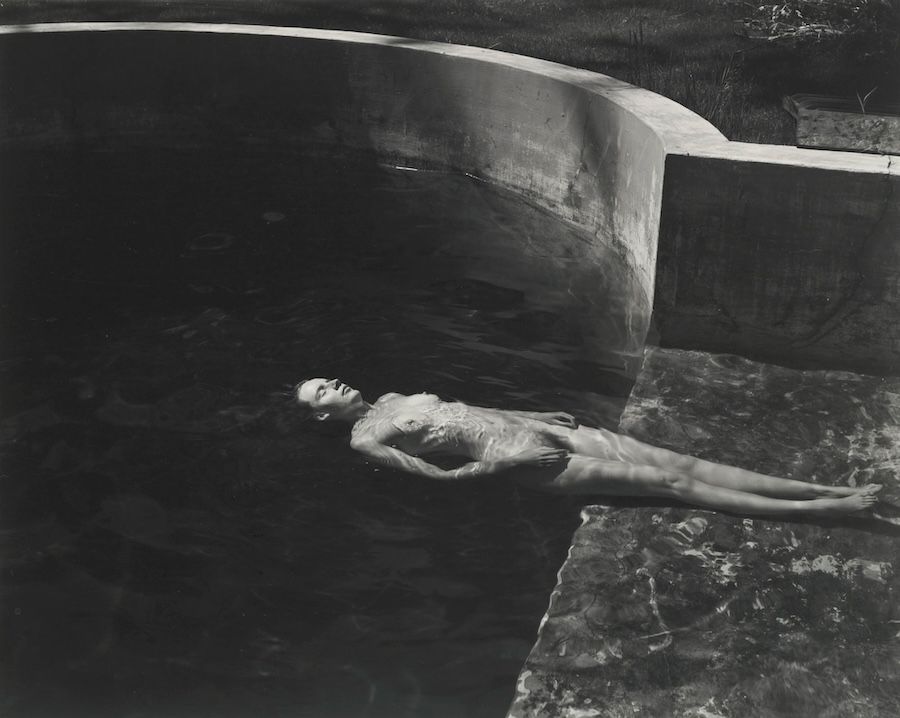
Following his Mexican period, Weston embarked on celebrated series of nudes, treating the human body as pure form, exploring the interplay of lines, volumes, and shadows rather than narrative or psychological depth. Simultaneously, he turned his attention to still life, elevating everyday objects – shells, peppers, leaves, rocks – into protagonists of compositions that reveal their inherent structure. His iconic “Pepper No. 30” exemplifies this approach, offering an abstract reading of reality without sacrificing its tangible presence, a sensibility that would later influence artists like Robert Mapplethorpe.
From the late 1920s onwards, the American landscape became central to Weston’s work. He captured the deserts, coastlines, and natural parks of the West, favouring untouched locations devoid of human presence. His images convey an epic and contemplative vision of nature, attentive to light, atmospheric phenomena, and the morphology of the land. Later works, from the 1940s, take on a more melancholic tone, reflecting themes of decay and mortality. Finally, at Point Lobos, Weston rediscovered a primal and vibrant nature, inspiring a renewed perspective suspended between the concrete and the metaphysical.
A pioneer of direct, unadorned photography, Weston favoured large-format cameras as his primary tool. His technical rigor, combined with a profound connection to light and form, resulted in a body of work now considered iconic. “Edouard Weston. The Question of Forms” invites viewers to rediscover not only a master photographer, but a timeless lesson: photography as an exercise in seeing, a practice of knowledge, and an experience capable of bearing witness to the inexhaustible beauty of the world.
Renato Verga, ilTorinese.it